Village News
Talking trash
18 August 2026
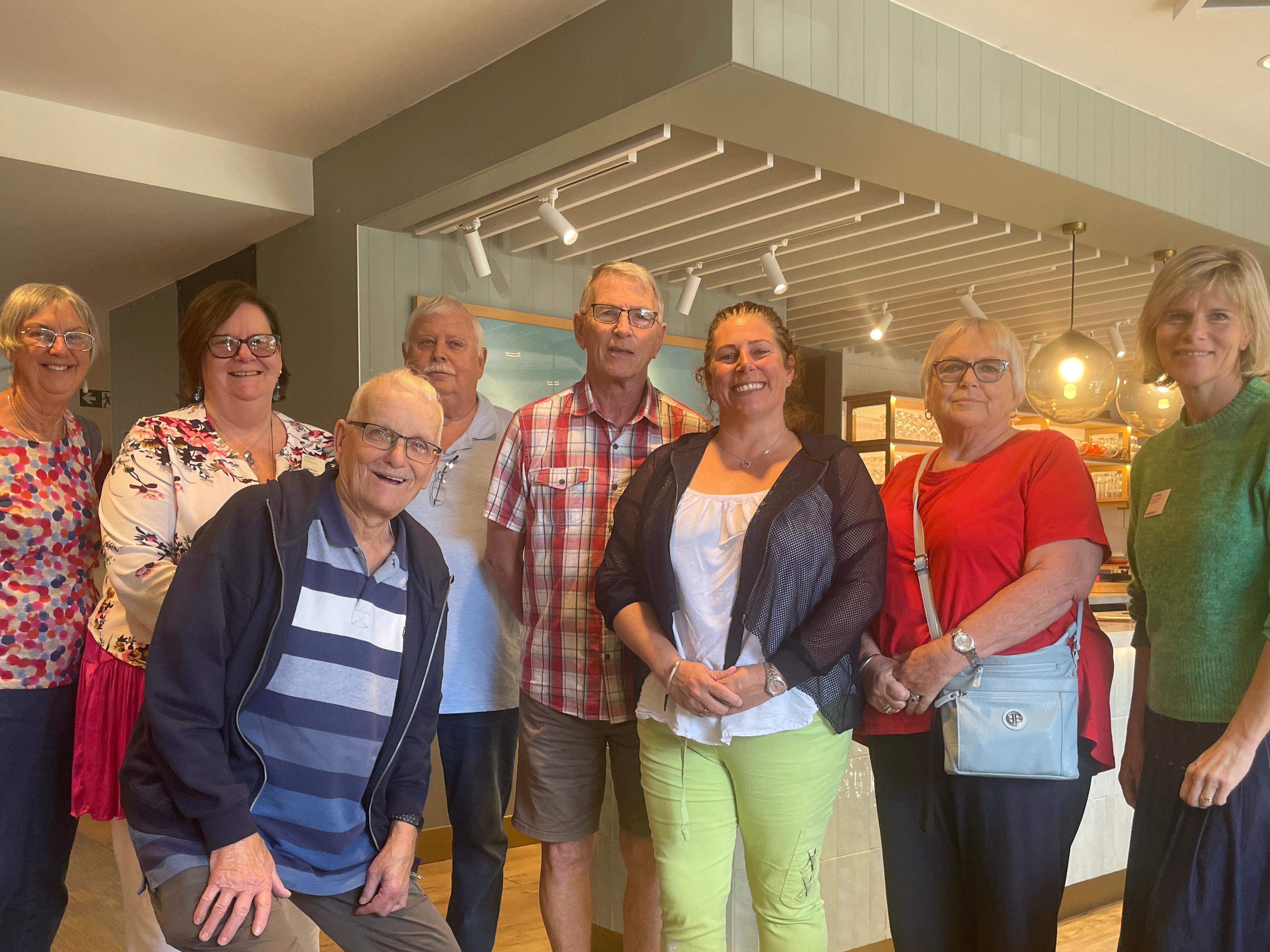
Edgewater Village residents get ‘Waste-Ed with Kate’ and discover the importance of sustainability and minimising waste.
“Talking rubbish is my full-time job.”
With that opening line, sustainability educator Kate Fenwick had a room of residents at Edgewater Village immediately engaged. But beneath the blatant humour, her interactive “Waste-Ed with Kate” workshop delivered a powerful message: the way we think about waste really matters.
The session tackled everything from recycling myths and food waste volumes to greenwashing and everyday habits that steadily add to landfill.
Around 30 residents arrived curious and left inspired – armed with practical tips, surprising facts and, perhaps most importantly, the knowledge that small changes do make a difference.
Some of the statistics Kate shared during the workshop were sobering.
Around 50 percent of household rubbish sent to landfill each week is food and green waste – material that many people assume will naturally break down or decompose.
“One of the biggest myths is that food waste just breaks down in landfill,” Kate told residents. “It doesn’t. Landfill is basically a giant sealed storage pit – designed to store waste for a thousand years.”
Her description of how modern landfills operate left many residents visibly surprised. From toxic “leachate” created by compacted rubbish to methane emissions generated by food scraps, the workshop shone a light on what really happens after the wheelie bin contents are taken away.
But in keeping with the workshop’s upbeat spirit, Kate balanced the heavier realities with practical, achievable solutions.
Residents discussed composting, worm farms, reducing food waste and learning to recycle correctly.
One of the biggest takeaways? Recycling contamination remains a huge issue.
Kate shared that around 30 percent of what Aucklanders put in their recycling bins currently ends up in landfill because of incorrect items, dirty containers and ‘wish-cycling’ – a term used when people throw something in the recycling bin simply hoping it can be recycled.
The best thing people can do is keep it simple,” Kate explained. “If in doubt about whether it can be recycled, throw it out.”
Kate also challenged residents to think differently about convenience culture and greenwashing. Disposable coffee cups labelled “compostable” were among the products she described as misleading. “If you wouldn’t eat it or drink it,” she joked, “you probably shouldn’t compost it.”
What resonated most strongly throughout the morning was Kate’s message that sustainability doesn’t require perfection – just participation.
“We justify convenience all the time,” she said. “But we can’t justify leaving the planet in a worse state than the one we inherited.”
The event reflected Metlifecare’s ongoing commitment to sustainability education and village connection. By creating opportunities for residents to engage in empowering conversations like these, it’s making environmental proactivity feel achievable.
Edgewater Village is one of 15 Metlifecare villages that have either already hosted a Waste-Ed with Kate session or are scheduled to host one in the coming months.
Residents who have taken part have gained a fresh perspective on how small, everyday behaviours can create meaningful change, but most importantly, how talking rubbish is neat!
Kate’s top five tips for reducing waste – are you doing this?
- Rinse your recycling – Containers don’t need to be spotless, but a quick rinse helps prevent contamination.
- Remove lids before recycling – Different plastics are processed differently, and lids often jam sorting machinery.
- Avoid wish-cycling – If you’re unsure whether something can be recycled, it’s better to place it in the rubbish bin rather than contaminate recycling loads.
- Reduce food waste – Composting food scraps keeps methane-producing waste out of landfill.
- Choose reusable over single-use – Coffee cups, shopping bags and containers used again do make a huge difference over time.